King's Chapel and the adjacent King's Chapel Burying Ground form one of the most historically layered stops along the Freedom Trail. Together, they tell a story that reaches back to the earliest years of colonial Boston and reflects the city’s transformation through the American Revolution and beyond.
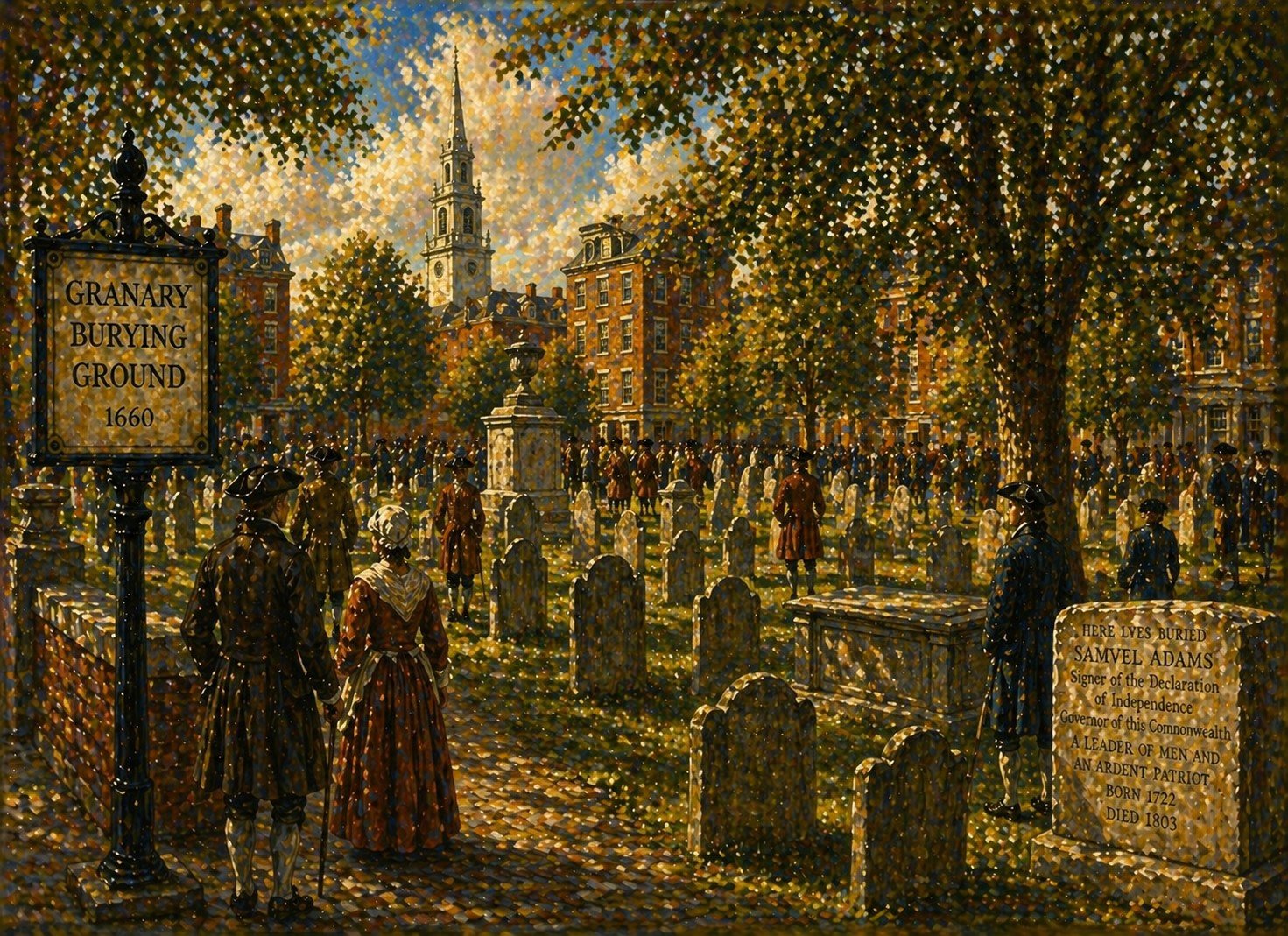
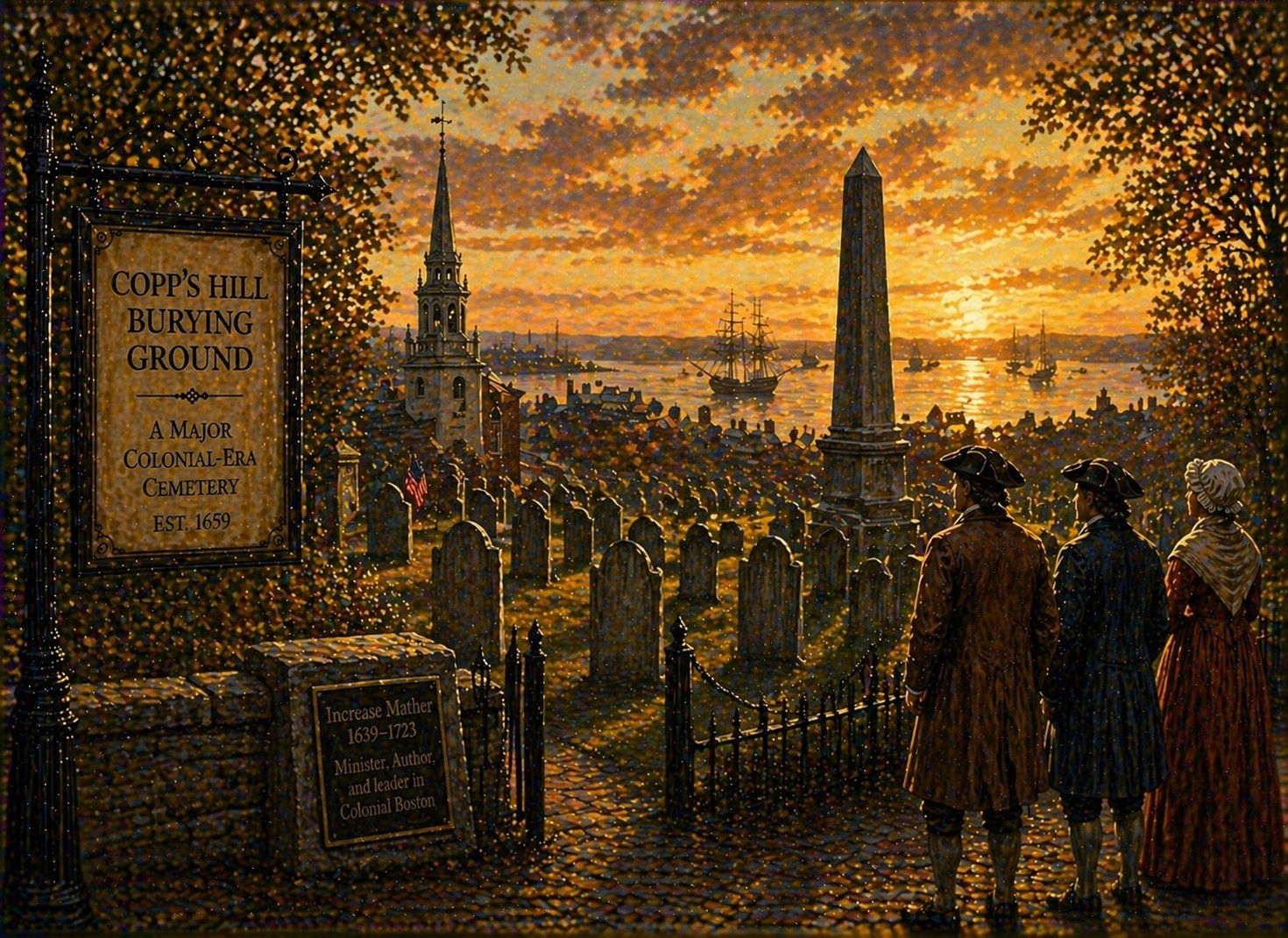
The King’s Chapel Burying Ground, established in 1630, is Boston’s oldest cemetery. It predates the church itself and served as the primary burial site for early settlers. Within its compact grounds lie the remains of many prominent colonial figures, including John Winthrop, the first governor of the Massachusetts Bay Colony. The burying ground provides a tangible link to the city’s Puritan origins, with gravestones that feature traditional 17th and 18th-century imagery such as skulls, wings, and hourglasses, symbols reflecting the religious beliefs and attitudes toward mortality at the time.
King’s Chapel was founded later, in 1686, as the first Anglican church in New England. Its establishment marked a significant shift in the religious landscape of Boston, which had been dominated by Puritan congregations. The creation of an Anglican church under British authority was controversial, as it represented both religious and political influence from the Crown. The original wooden structure was eventually replaced in 1754 by the current stone building, designed in a restrained yet elegant Georgian style. Its gray granite exterior and simple lines distinguish it from the more ornate churches found in other colonial cities.
The relationship between King’s Chapel and the surrounding community evolved dramatically during the American Revolution. As tensions between the colonies and Britain intensified, the church’s association with the Anglican tradition, and by extension, British authority, placed it in a complicated position. When the British evacuated Boston in 1776, many Loyalists, including the church’s minister, left the city. King’s Chapel was temporarily closed, reflecting the upheaval of the period.
After the war, the church reopened under a new identity. It became one of the first Unitarian congregations in the United States, adapting its theology and practices to align with the emerging religious climate of the independent nation. This transformation is a key part of its historical significance, illustrating how institutions connected to colonial rule were reshaped in the aftermath of independence.
Inside King’s Chapel, visitors encounter a space that retains much of its 18th-century character. Box pews, wooden paneling, and a simple pulpit reflect the design priorities of the time, emphasizing clarity and focus rather than elaborate decoration. The interior conveys a sense of continuity, allowing visitors to experience the environment in which generations of Bostonians worshipped and gathered.
As part of the Freedom Trail, King’s Chapel and its burying ground represent both continuity and change. The cemetery connects directly to the earliest period of settlement, while the church itself reflects the shifting political and religious landscape leading up to and following the revolution. Together, they illustrate how Boston evolved from a Puritan colony into a more diverse and independent society.
The site also highlights the close relationship between religion and public life in colonial America. Churches were not only places of worship but also centers of community activity and political discussion. The debates and divisions that unfolded within and around King’s Chapel mirror the broader conflicts that shaped the revolutionary era.
Today, King’s Chapel remains an active place of worship while also serving as a historic landmark. Its dual role allows it to function both as a living institution and as a site of historical interpretation. Visitors can attend services, take guided tours, or simply walk through the adjacent burying ground, reflecting on the lives and events connected to the site.
The juxtaposition of the church and the cemetery adds to the depth of the experience. The burying ground’s weathered stones and uneven paths contrast with the structured, orderly design of the church, creating a physical representation of the passage of time and the layering of history.
King’s Chapel and its burying ground offer a unique perspective on Boston’s past. They capture the intersection of faith, religion, and identity in a city at the center of revolutionary change. As part of the Freedom Trail, they provide visitors with a deeper understanding of how the foundations of American society were shaped, not only through conflict and protest but also through adaptation and transformation.