
Boston Freedom Trail
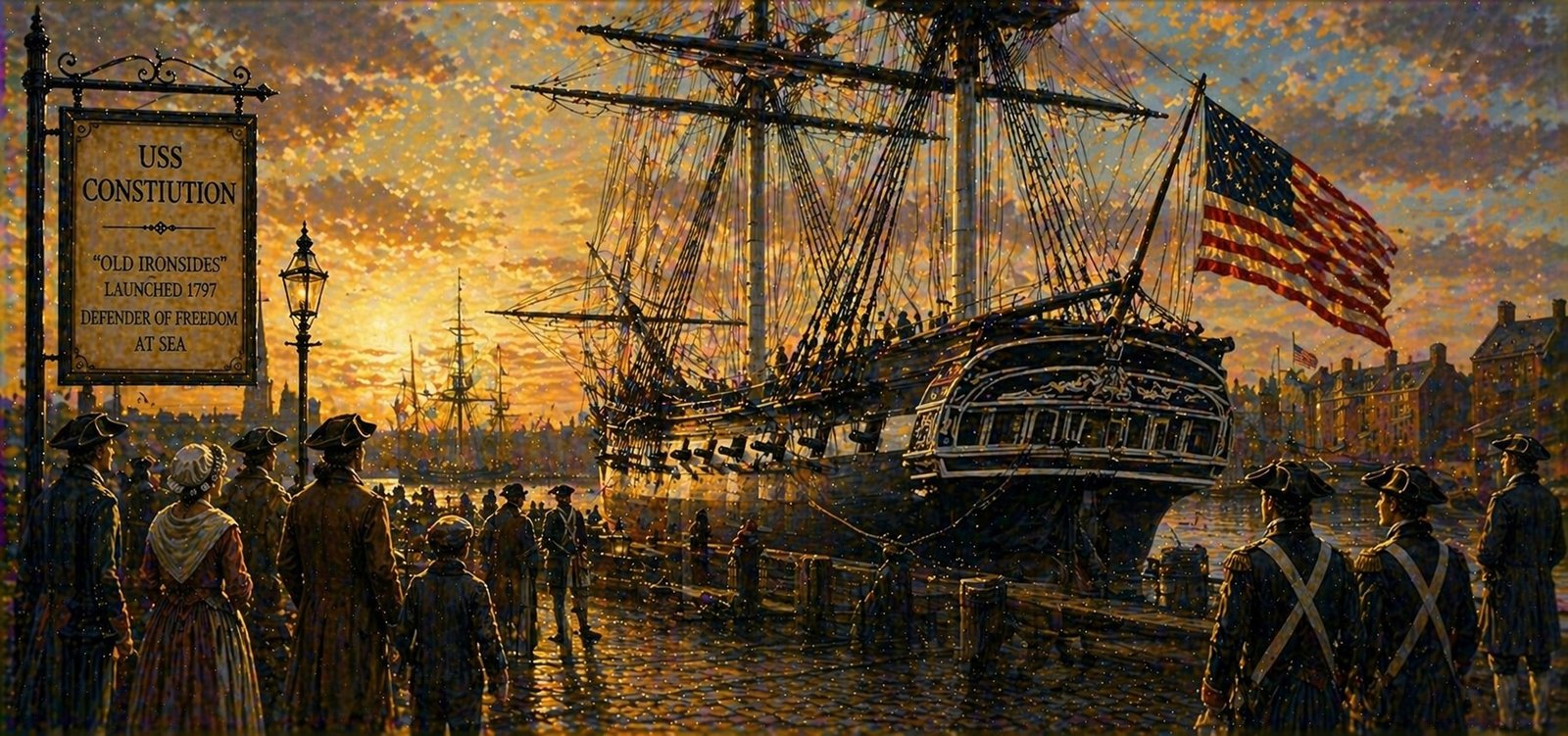
The Boston Freedom Trail is a 2.5-mile walking route through Boston, Massachusetts, that connects 16 historically significant sites tied to the origins of the United States. Marked by a distinctive red line, often made of brick or painted onto sidewalks, the trail guides visitors from Boston Common through downtown streets and into the historic North End, before ending in Charlestown at the Bunker Hill Monument and USS Constitution.
The trail tells the story of the American Revolution by linking places associated with protest, political debate, and early conflict. Visitors encounter locations such as meeting houses where colonists gathered, burial grounds of key figures, and sites of major events like the Boston Massacre and the Boston Tea Party. Each stop adds context to the growing tensions between the colonies and Britain.
What makes the Freedom Trail unique is its accessibility. It is not a museum but a path through a living city, where modern Boston surrounds centuries-old landmarks. Visitors can explore at their own pace or join guided tours for deeper insight. Whether you’re interested in history, architecture, or simply walking through one of America’s oldest cities, the Freedom Trail offers a structured and engaging way to experience Boston’s past.
Learn MorePeople, Events & Background
About The Boston Freedom Trail
Location
Boston Common
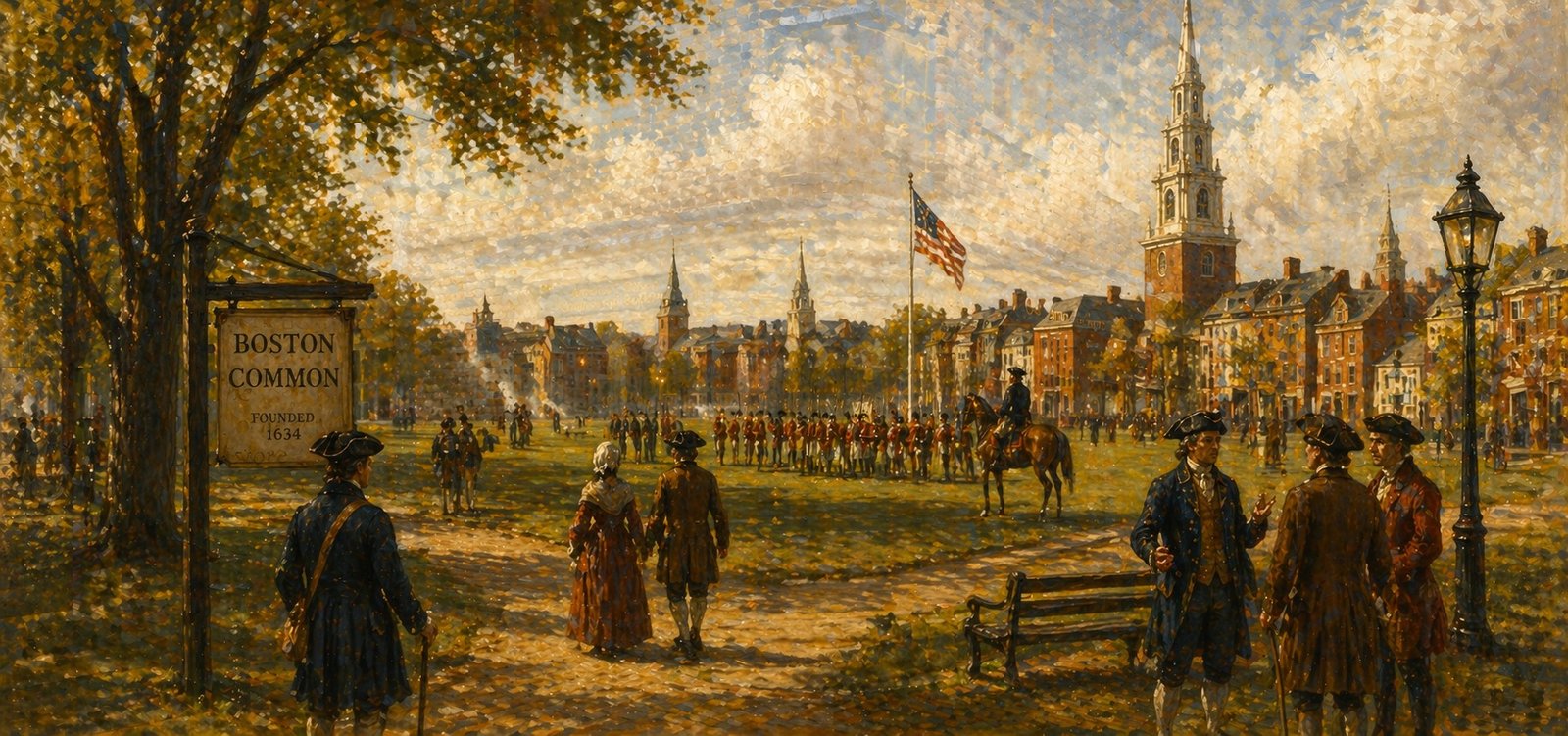
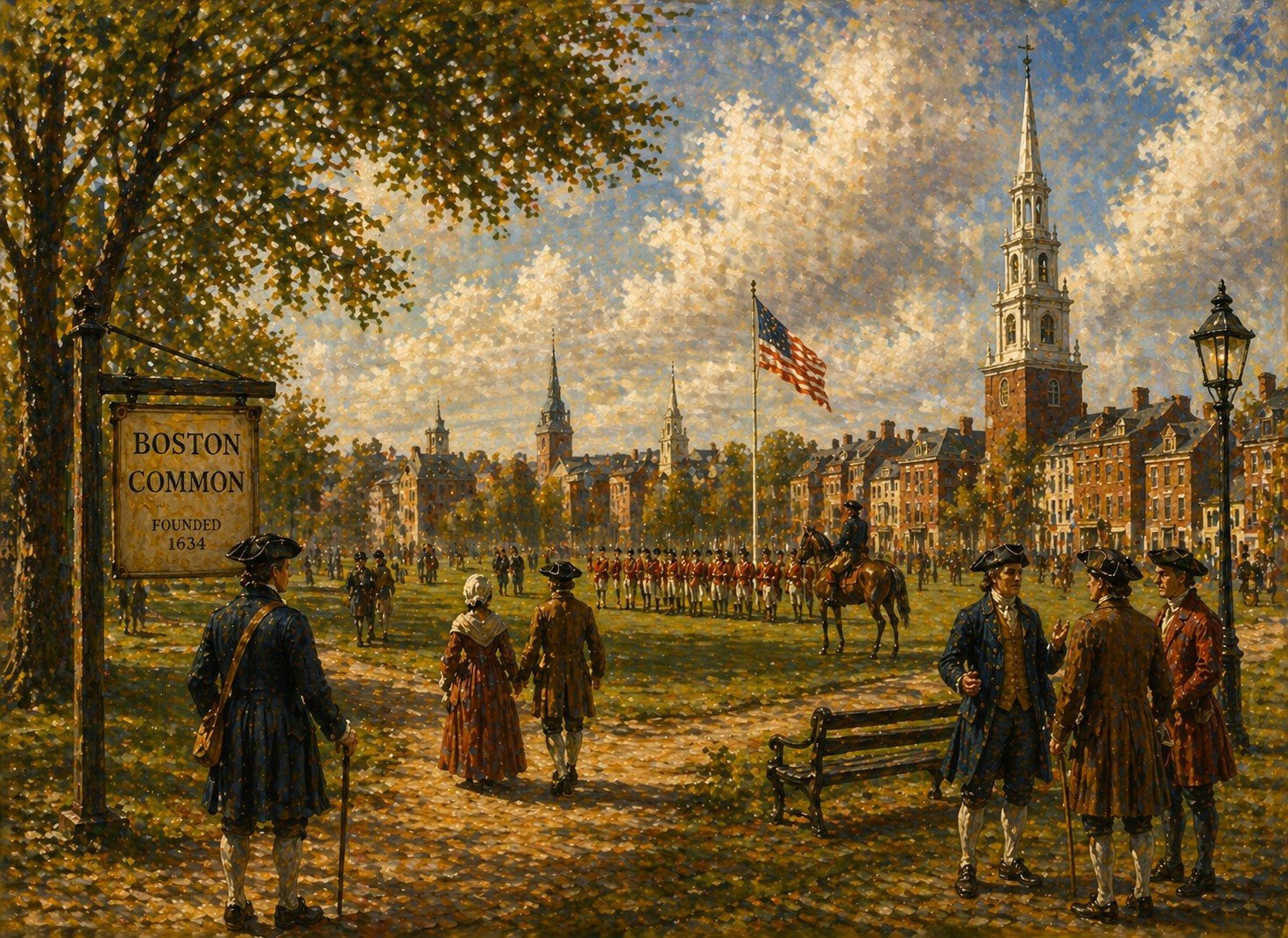
Boston Common holds a central and symbolic place on the Freedom Trail as its traditional starting point. Established in 1634, it is the oldest public park in the United States and serves as the gateway into Boston’s revolutionary story. Beginning the trail here is fitting, as the Common reflects the early communal life of the colony and the social environment from which revolutionary ideas would later emerge.
Originally used as shared grazing land for livestock, Boston Common evolved into a multifunctional civic space. By the 18th century, it was a site for public gatherings, militia training, and at times even executions. Its open layout made it ideal for drilling colonial forces, some of whom would later take part in the struggle against British rule. During the period leading up to the American Revolution, British troops camped on the Common, turning it into a visible symbol of occupation and control.
As the first stop on the Freedom Trail, Boston Common sets the tone for the journey that follows. It introduces visitors to the physical and historical landscape of Boston while providing context for the events that unfolded throughout the city. From here, the red brick path leads to nearby landmarks such as the Massachusetts State House, guiding visitors from a broad communal space into more defined political and historical sites.
Today, Boston Common remains an active public park, hosting events, recreation, and daily life. This continuity between past and present enhances its significance, making it not just a starting point, but a living reminder of Boston’s long history.
People
Paul Revere's House
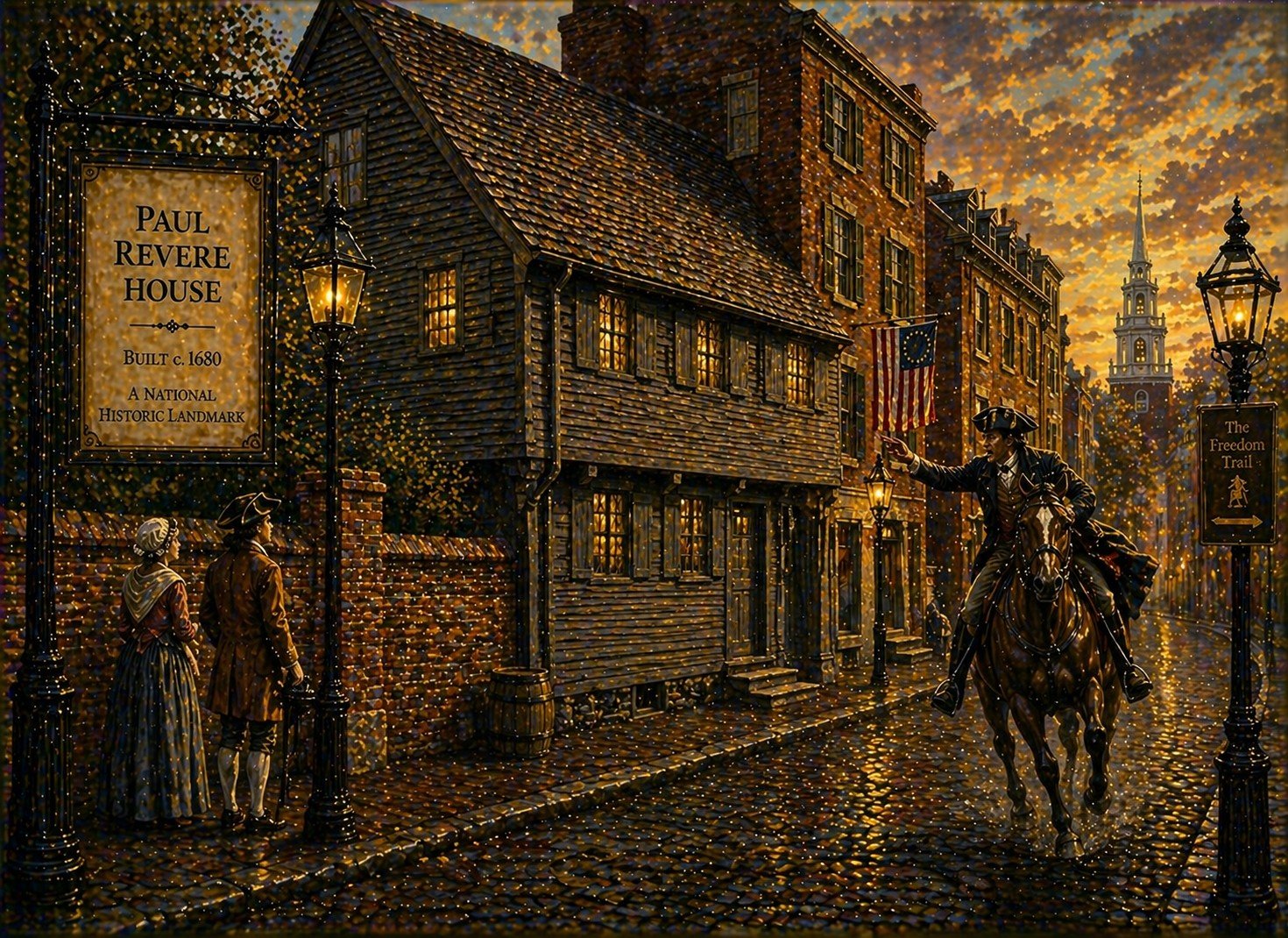
Paul Revere is one of the most recognizable figures of the American Revolution, and his former home, the Paul Revere House, is a key stop on the Freedom Trail. Located in Boston’s historic North End, the house provides a direct and personal connection to the life of a man whose actions helped shape the course of American history.
Built around 1680, the Paul Revere House is the oldest surviving structure in downtown Boston. Revere purchased the home in 1770, at a time when tensions between the American colonies and Britain were rapidly escalating. He lived there with his family while working as a silversmith, engraver, and active participant in revolutionary networks. The house served not only as a residence but also as a base for his professional and political activities.
Revere is most famous for his Midnight Ride in April 1775, when he helped warn colonial militias of advancing British troops. However, his role extended far beyond this single event. He was deeply involved in groups such as the Sons of Liberty and contributed to the spread of revolutionary ideas through his engravings. His depiction of the Boston Massacre, for example, played a significant role in shaping public opinion against British forces.
As a stop on the Freedom Trail, the Paul Revere House offers a more intimate perspective on the revolution. Whilst many sites along the trail focus on public events and large gatherings, this location highlights the everyday environment in which revolutionary figures lived and worked. Visitors can walk through the restored rooms, gaining insight into colonial domestic life and the conditions that shaped Revere’s experiences.
Ultimately, the Paul Revere House connects the broader narrative of the Freedom Trail to the personal story of one individual, illustrating how ordinary spaces became part of extraordinary historical events.
Events
The Boston Massacre
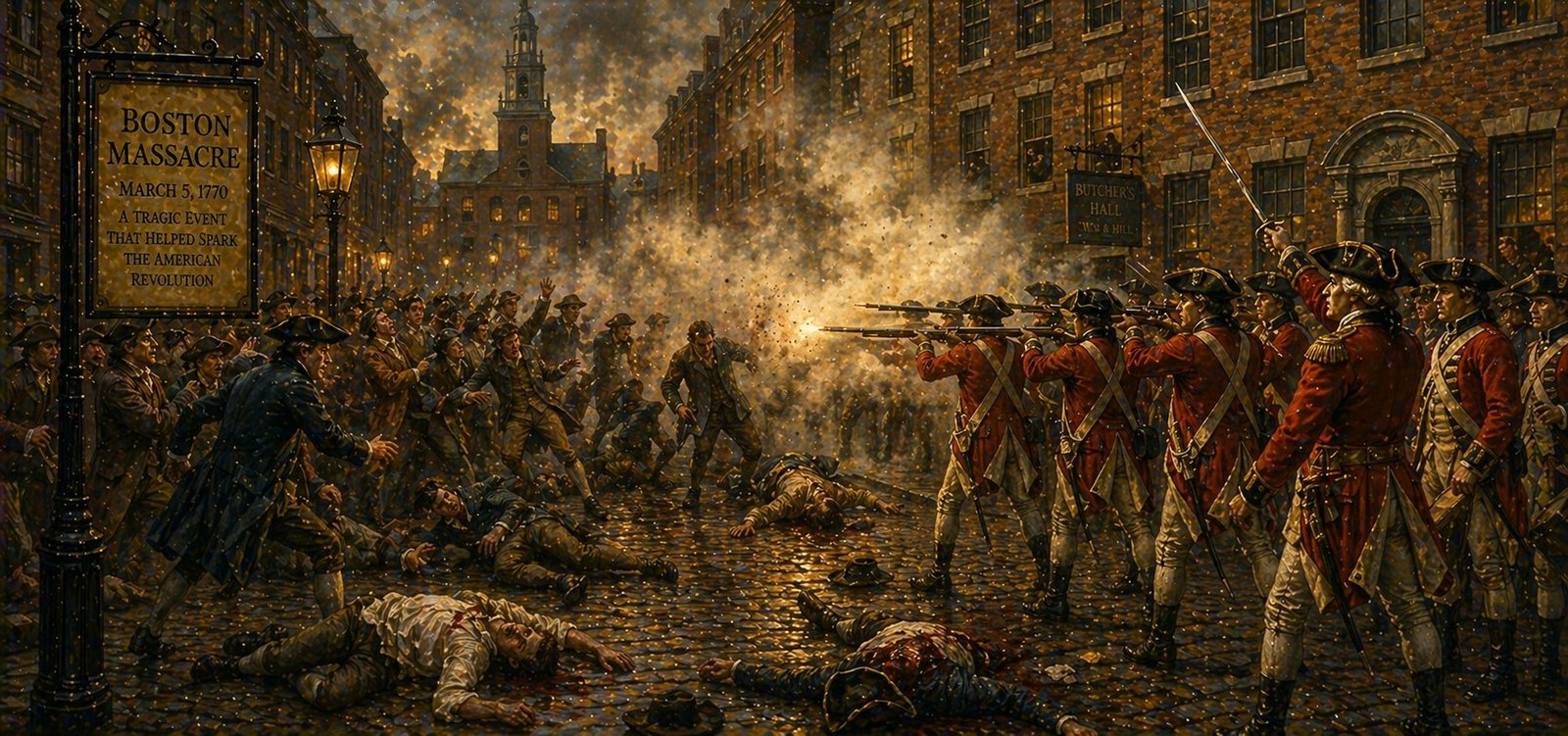
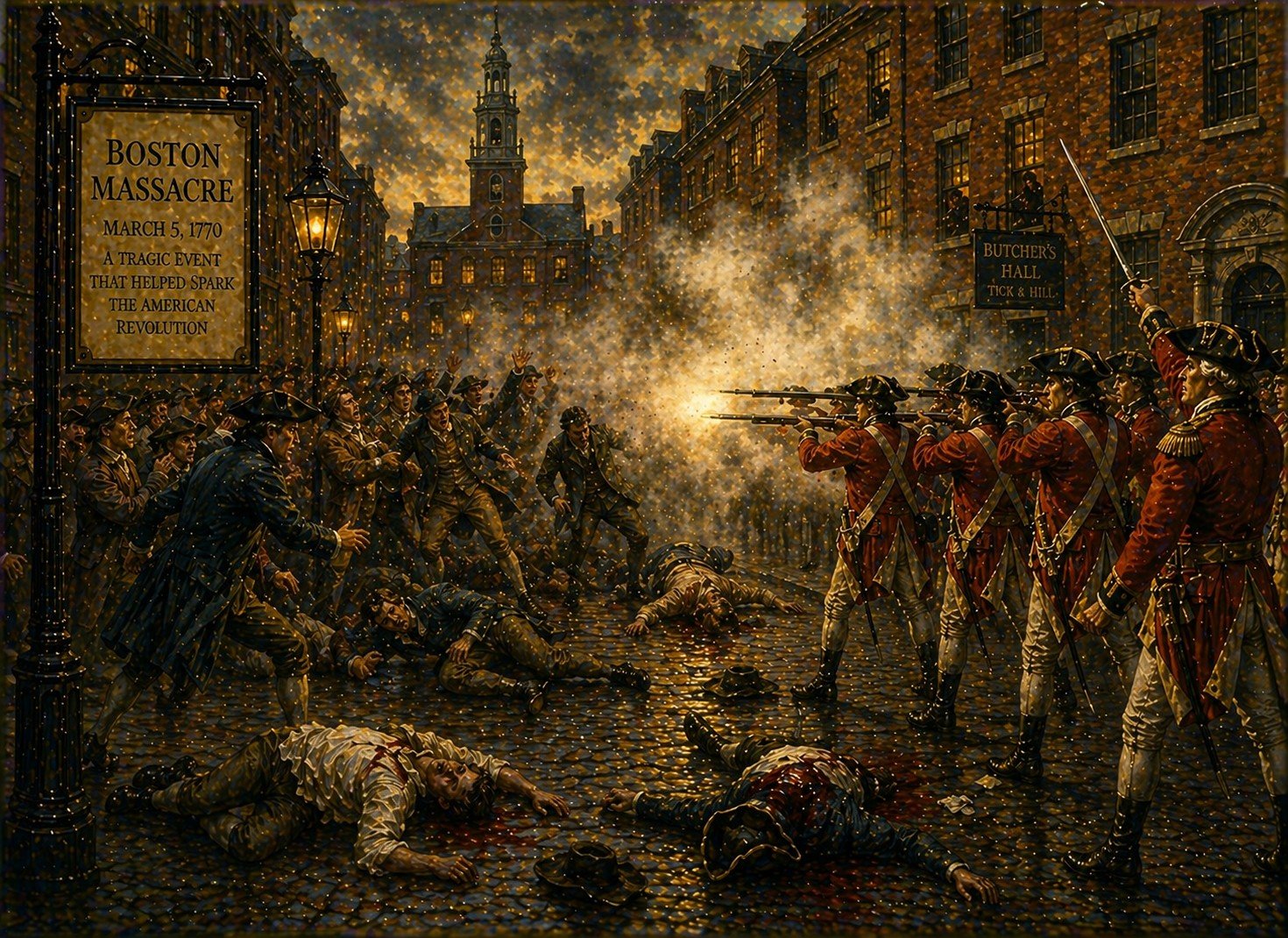
The Boston Massacre is one of the most pivotal events remembered along the Freedom Trail. The site of the incident, located just outside the Old State House on State Street in Boston, marks the place where tensions between British troops and colonists erupted into deadly violence on March 5, 1770.
In the years leading up to the massacre, Boston was a city under strain. British soldiers had been stationed there to enforce unpopular laws and maintain order, but their presence often led to conflict with local residents. Economic hardship and political resentment fueled hostility, creating an atmosphere where even minor disputes could escalate quickly. On the night of the massacre, a confrontation between a sentry and a group of colonists grew into a larger crowd. Amid confusion and rising aggression, British soldiers fired into the crowd, killing five men, including Crispus Attucks.
Today, the site is marked by a circle of stones embedded in the street, a simple but powerful reminder of the event. As visitors follow the Freedom Trail, this stop represents a turning point in the narrative. Earlier locations highlight protest and debate, but the Boston Massacre demonstrates how those tensions could lead to violence.
The aftermath of the massacre was equally significant. Colonial leaders used the event to rally opposition to British rule, spreading accounts and images that emphasized the brutality of the action. At the same time, the trial of the soldiers, defended by John Adams, underscored the importance of justice and the rule of law.
As part of the Freedom Trail, the Boston Massacre site provides a moment of reflection, connecting visitors to the cost of the struggle for independence and the events that helped ignite the revolutionary movement.