The Massachusetts State House is one of the most prominent landmarks along the Freedom Trail, both visually and historically. Perched atop Beacon Hill, directly overlooking Boston Common, the building stands as a powerful symbol of Massachusetts’ political heritage and its role in shaping the United States.
Completed in 1798, the Massachusetts State House was designed by renowned American architect Charles Bulfinch, one of the leading figures in early American architecture. His design reflected the neoclassical style that was popular in the post-Revolutionary period, drawing inspiration from ancient Greek and Roman forms. This architectural choice was not accidental; it was meant to evoke the democratic ideals associated with classical civilizations, aligning the new American republic with those traditions.
The most recognizable feature of the building is its iconic golden dome. Originally made of wood and later covered in copper by Paul Revere’s company, the dome was eventually gilded, giving it the brilliant appearance it has today. The dome has become one of the defining features of Boston’s skyline and a visual anchor for visitors beginning their journey along the Freedom Trail.
Although the State House was built after the American Revolution, it occupies land deeply connected to that earlier period. Beacon Hill itself was once partially leveled to make way for development, but in colonial times it served as a prominent natural landmark. By the late 18th century, the decision to build the State House on this site symbolized a transition from colonial rule to independent governance.
Inside, the building houses the offices of the Governor of Massachusetts and the state legislature, known as the General Court. The interior features grand staircases, historic chambers, and numerous works of art that reflect the state’s history. Murals, statues, and portraits throughout the building commemorate key figures and events, linking the political present to the revolutionary past.
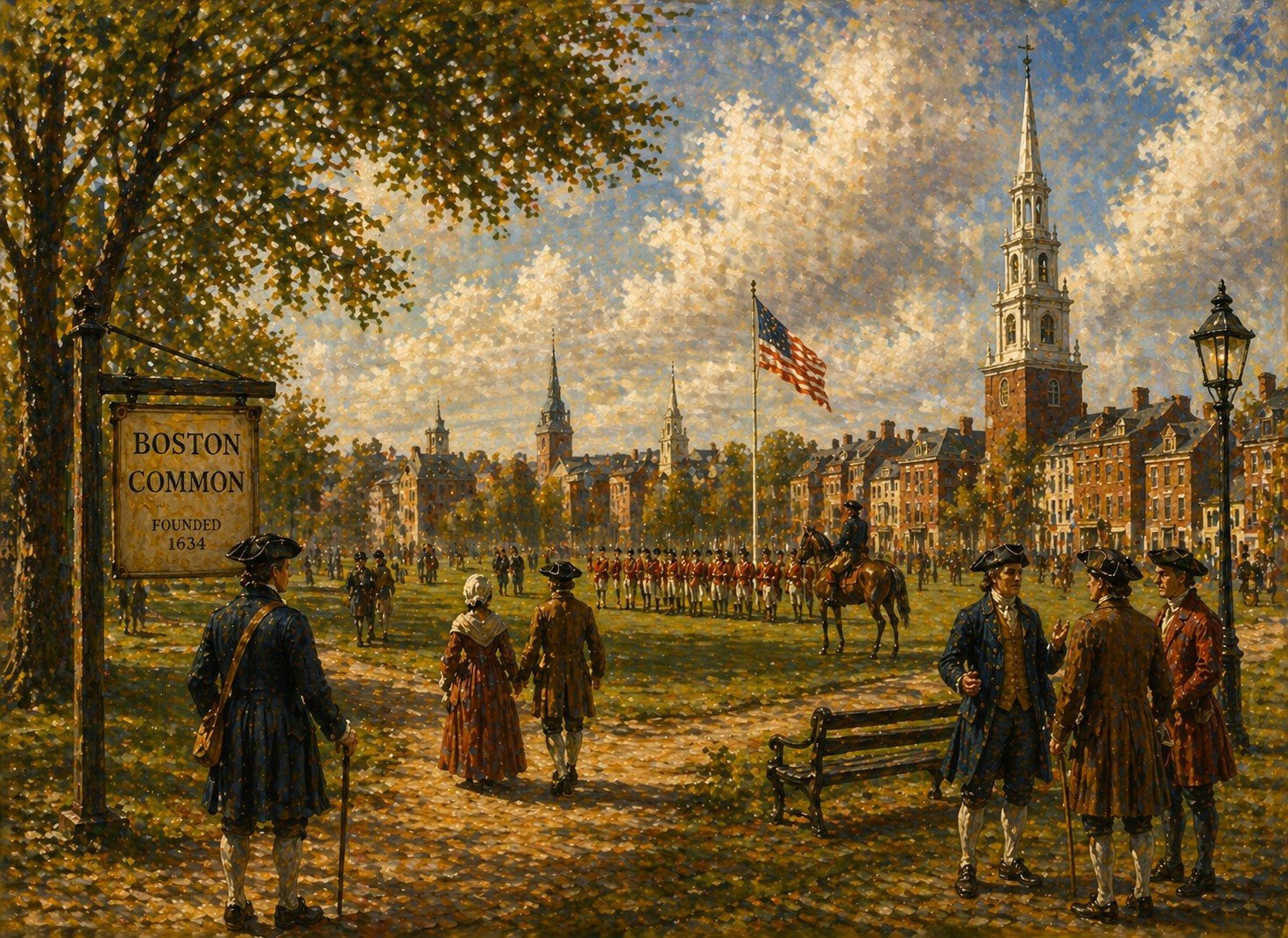
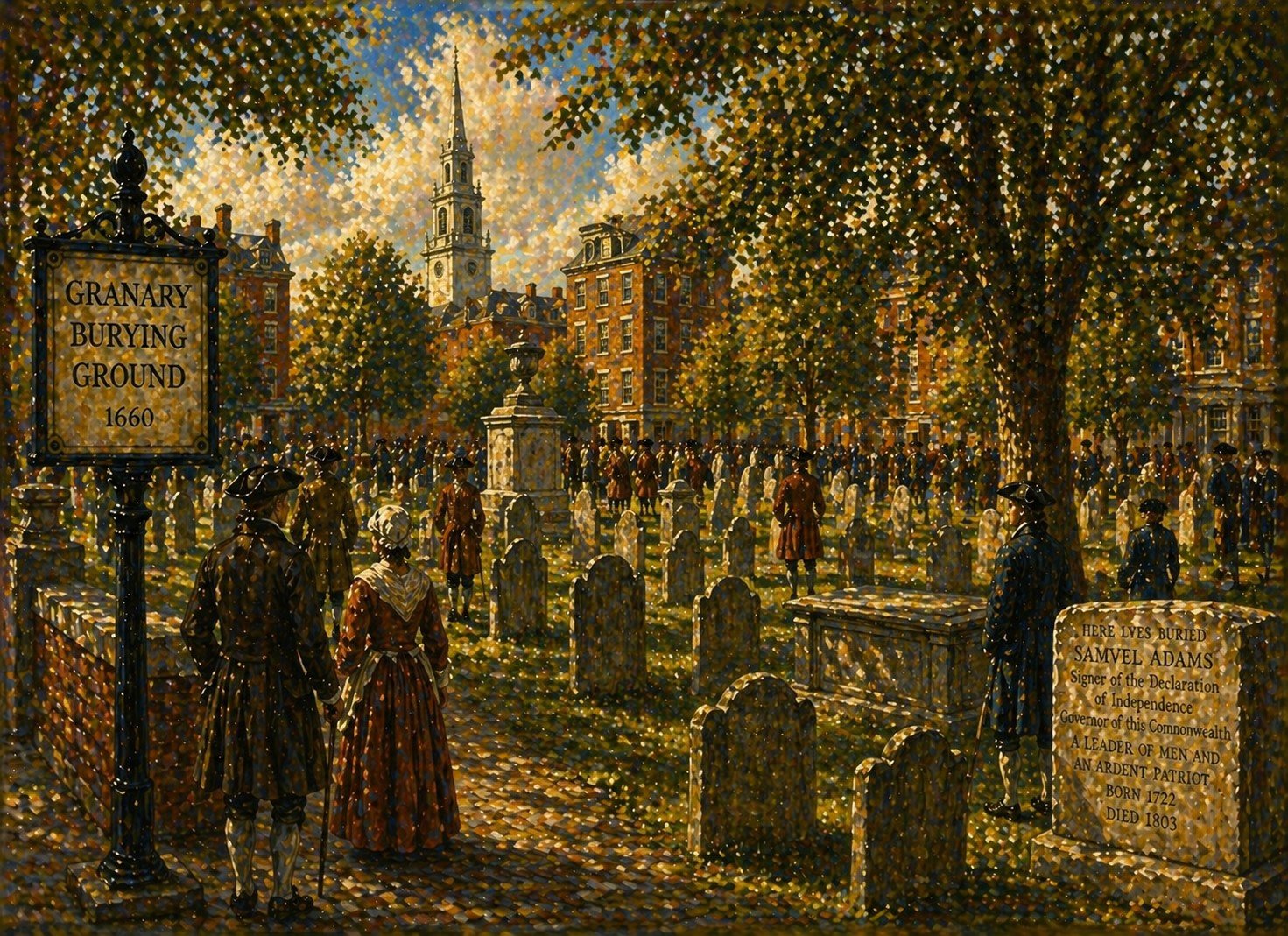
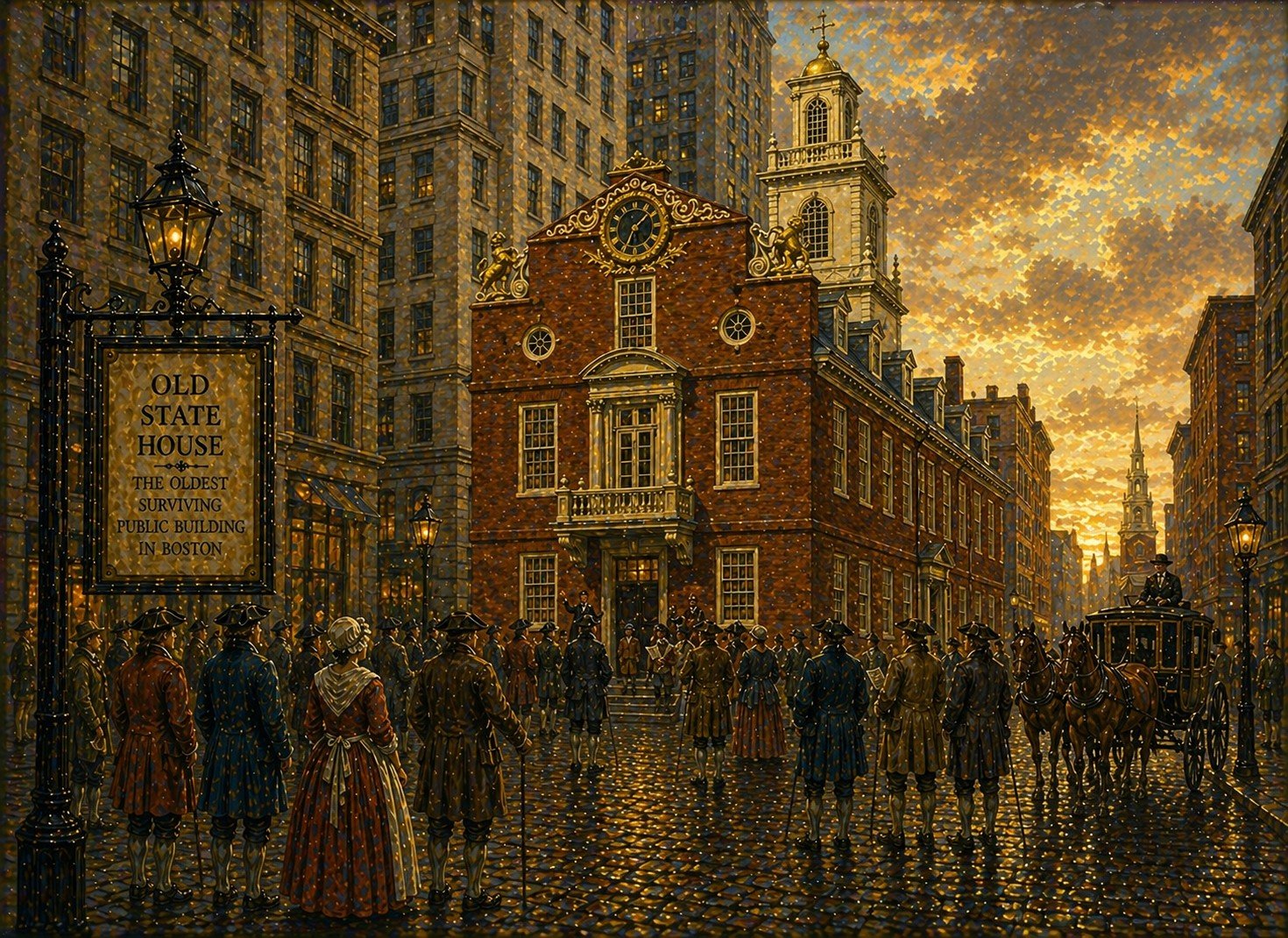
As a stop on the Freedom Trail, the Massachusetts State House represents the continuation of the ideals that motivated the revolution. Whilst earlier sites along the trail, such as Boston Common and the Granary Burying Ground, are directly tied to colonial unrest and resistance, the State House reflects the outcome of that struggle i.e., the establishment of a functioning democratic government. It serves as a reminder that the revolution was not only about breaking away from British rule but also about creating new systems of governance.
The building’s location at the edge of Boston Common reinforces this connection. Visitors often move from the open, historically layered space of the Common to the formal, structured environment of the State House, symbolizing a progression from protest and conflict to order and stability. This physical transition mirrors the broader historical journey from colony to independent state.
Over the years, the Massachusetts State House has remained an active center of political life. It has witnessed debates, legislation, and decisions that have shaped not only the state but also the nation. Its continued use as a seat of government distinguishes it from many other historic sites on the Freedom Trail, which function primarily as preserved landmarks or museums.
The State House also plays an educational role for visitors. Guided tours provide insight into both its history and its current function, allowing people to see how the principles of representative government are carried out in practice. This makes it a particularly meaningful stop for those interested in the evolution of American democracy.
In addition to its political and historical significance, the building contributes to the character of the Beacon Hill neighborhood, one of Boston’s most historic and picturesque areas. The surrounding streets, lined with brick row houses and narrow sidewalks, reflect the city’s 19th-century development and provide a fitting backdrop for the State House. The Massachusetts State House stands as a bridge between past and present. As part of the Freedom Trail, it connects the revolutionary events of the 18th century with the ongoing practice of governance in the modern era. Its architecture, location, and function all contribute to its importance, making it not just a landmark, but a living symbol of the ideals that shaped the United States.